Search Engine Optimization: Your Complete Guide to Ranking on Google in 2026
I've spent over a decade working with search engine optimization, and here's what I've learned: SEO is one of the most powerful marketing channels available, but it's also one of the most misunderstood. You'll find countless "experts" promising overnight success, but the reality is that effective SEO strategy requires patience, technical knowledge, and a genuine commitment to creating value for your audience.
In this comprehensive guide, I'm going to walk you through everything you need to know about search engine optimization-from the foundational concepts to advanced SEO techniques that'll help you outrank your competitors. Whether you're completely new to SEO marketing or you're looking to refine your existing strategy, you'll find actionable insights you can implement today.
Table of Contents
- What is SEO? Understanding the Fundamentals
- Why SEO Services Matter for Your Business
- On-Page SEO: Optimizing Your Content for Rankings
- Off-Page SEO Techniques That Build Authority
- Technical SEO: The Foundation of Success
- Building Your Complete SEO Strategy
- Frequently Asked Questions
What is SEO? Understanding Search Engine Optimization from the Ground Up
Let's start with the basics. Search engine optimization (SEO) is the practice of improving your website to increase its visibility when people search for products, services, or information related to your business on search engines like Google, Bing, or DuckDuckGo. The better visibility your pages have in search results, the more likely you are to attract attention and draw prospective customers to your business.
Think of it this way: every day, billions of searches happen on Google alone. People are looking for answers, solutions, products, and services. If your website doesn't appear when your potential customers search, you're missing out on valuable traffic-and that traffic is already interested in what you offer.
How Search Engines Actually Work
Before we dive into optimization techniques, you need to understand what happens behind the scenes. Search engines use automated programs called "crawlers" or "spiders" that constantly browse the web, discovering and cataloging content. Here's the process:
- Crawling: Search engine bots discover pages by following links from page to page and by reading sitemaps you provide.
- Indexing: Once discovered, search engines analyze the content and store it in a massive database called an index. They're trying to understand what each page is about.
- Ranking: When someone performs a search, the search engine sifts through its index to provide the most relevant and useful results, ranking them based on hundreds of factors.
What most guides miss is this: search engines aren't trying to trick you. Their goal is to provide the best possible answers to user queries. If you create genuinely helpful content and make it easy for search engines to understand and access, you're already halfway there.
The Three Pillars of SEO
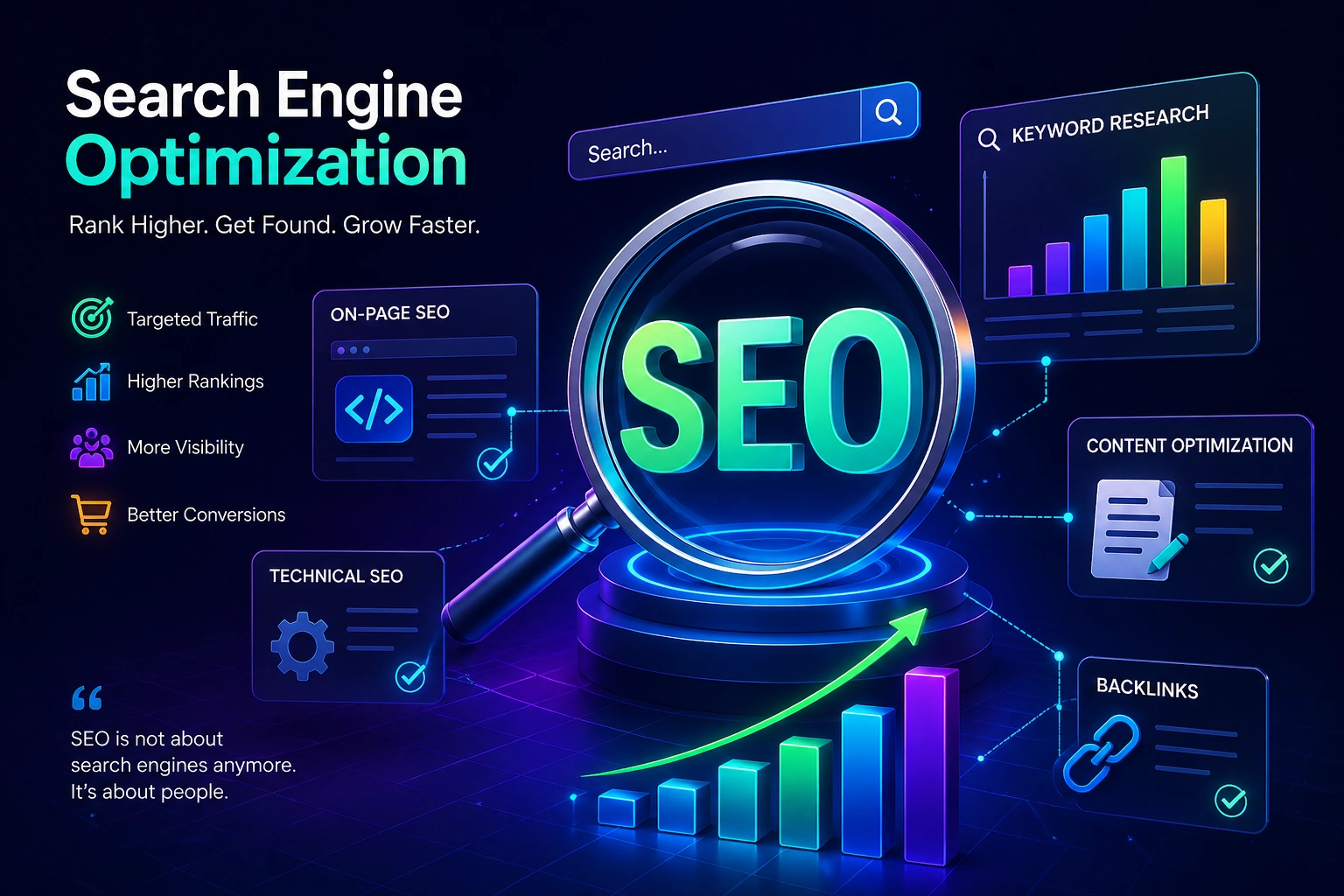
Every successful SEO campaign rests on three foundational pillars:
You need all three working together. Neglect any one pillar, and your entire SEO strategy becomes unstable.
Why SEO Services Matter More Than Ever for Your Business
You might be thinking, "Can't I just run ads and get traffic that way?" Sure, you can. But here's the thing-paid advertising stops working the moment you stop paying. SEO optimization delivers long-term, compound returns. A well-ranked page can drive consistent traffic for months or even years without additional investment.
I've seen businesses transform their entire growth trajectory through strategic SEO marketing. Here's why it matters:
Organic Traffic is High-Intent Traffic
When someone searches for "best project management software for remote teams," they're not casually browsing-they're actively looking for a solution. This search intent makes organic traffic incredibly valuable. These visitors are further along in their buyer's journey and more likely to convert than people who stumbled across a random ad.
SEO Builds Credibility and Trust
There's a psychological phenomenon at play: people trust organic search results more than paid ads. Ranking on the first page signals to users that search engines consider your content authoritative and relevant. In my experience, this implicit endorsement is worth its weight in gold for building brand credibility.
The Compound Effect of SEO Investment
Here's what gets me excited about SEO: it compounds over time. Unlike paid ads where you need continuous investment to maintain visibility, each piece of optimized content you create adds to your asset base. Your tenth blog post benefits from the authority built by the first nine. Your hundredth page makes your entire site stronger.
The data backs this up. Studies consistently show that organic search drives more than 50% of website traffic for most businesses. For e-commerce sites, that number can be even higher. You're leaving money on the table if you're not investing in SEO services.
Key Takeaways: Why Invest in SEO
- Organic traffic delivers consistent, long-term results without ongoing ad spend
- SEO targets high-intent users actively searching for your solutions
- Higher search rankings build credibility and trust with your audience
- SEO creates compounding returns-each optimized page strengthens your entire site
- Organic search typically drives 50%+ of total website traffic
- Well-executed SEO strategy provides better ROI than most marketing channels
On-Page SEO: The Complete Checklist for Content Optimization
On-page SEO is where you have the most direct control. It's everything that happens on your actual web pages-the content, the HTML source code, the structure. Get this right, and you're setting yourself up for success. Here's my complete on-page SEO checklist that I use for every piece of content I optimize.
Keyword Research: The Foundation of SEO Content Writing
You can't optimize for search engines if you don't know what people are searching for. Keyword research is the process of discovering the exact phrases your target audience types into search engines. Don't just guess-use data.
Here are the keyword research tools I rely on:
- Google Keyword Planner: Free tool directly from Google showing search volumes and competition
- Ahrefs Keywords Explorer: Provides keyword difficulty scores, search volume, and click metrics
- SEMrush: Excellent for competitive keyword analysis and finding gaps in your content
- AnswerThePublic: Visualizes question-based searches-perfect for content ideation
- Google Search Console: Shows which keywords you're already ranking for (often surprising!)
When conducting keyword research, I look for the sweet spot: keywords with decent search volume, manageable competition, and high relevance to what I'm offering. Long-tail keywords (phrases with three or more words) often convert better than generic single-word terms.
Content Quality: What Google Really Wants to See
Here's a truth that'll save you countless hours: Google has gotten incredibly good at identifying quality content. You can't trick the algorithm with keyword stuffing or thin content anymore. The search engine's goal is to surface content that genuinely helps users, and their ranking algorithms reflect that priority.
What makes content "quality" in Google's eyes?
- Expertise: Content written by people who actually know what they're talking about
- Comprehensiveness: Covering topics thoroughly, answering related questions users might have
- Originality: Fresh perspectives, original research, or unique insights-not just rehashed content from other sites
- User satisfaction signals: Low bounce rates, high time on page, repeat visitors
- Regular updates: Fresh, current information that stays relevant over time
In my experience, the single biggest mistake people make is creating content for search engines instead of for humans. Write for your audience first, then optimize for search engines second. That order matters enormously.
Title Tags and Meta Descriptions That Drive Clicks
Your title tag is arguably the most important on-page SEO element. It's what appears as the blue clickable headline in search results, and it tells both users and search engines what your page is about.
Here's my formula for effective title tags:
- Include your primary keyword near the beginning
- Keep it under 60 characters to avoid truncation in search results
- Make it compelling-you're competing for clicks against nine other results
- Be specific about what users will get from clicking
Meta descriptions don't directly impact rankings, but they absolutely affect click-through rates. Think of them as your ad copy in search results. Make them action-oriented, include your primary keyword naturally, and give users a clear reason to click.
Header Tags: Structuring Content for Readability and SEO
Header tags (H1, H2, H3, etc.) serve two crucial purposes: they make your content scannable for human readers, and they help search engines understand your content hierarchy. Use one H1 tag per page (typically your main headline), then use H2s for major sections and H3s for subsections.
I always include keywords in at least some of my header tags, but I never force it. The primary goal is clarity and readability. If including a keyword makes the header awkward or unclear, I leave it out.
Internal Linking Strategy That Distributes Page Authority
Internal links-links from one page on your site to another page on your site-are vastly underutilized. They help users navigate your content, but they also tell search engines which pages are most important and how your content relates to each other.
When I'm working on blog SEO optimization, I make sure to:
- Link to related content using descriptive anchor text (not just "click here")
- Create hub pages that link to clusters of related content
- Update older content with links to new, relevant articles
- Ensure important pages receive more internal links than less important ones
Think of your internal linking structure as a roadmap that guides both users and search engine crawlers through your most valuable content.
Image Optimization for SEO and User Experience
Images make your content more engaging, but they can also slow down your site if not optimized properly. Every image should have:
- Descriptive file names: "seo-keyword-research-tools.jpg" instead of "IMG_2847.jpg"
- Alt text: Describes the image for screen readers and search engines
- Compressed file size: Use tools like TinyPNG or ImageOptim to reduce file sizes without losing quality
- Appropriate dimensions: Don't upload a 4000px image if it'll display at 800px
Images can also rank in Google Image Search, driving additional traffic to your site. Don't overlook this opportunity.
Off-Page SEO Techniques: Building Authority Beyond Your Website
Off-page SEO is everything that happens outside your website that influences your rankings. The most important off-page factor? Backlinks. But there's more to it than just collecting links. Let's break down the off-page SEO techniques that actually move the needle.
Link Building Strategies That Still Work in 2026
Backlinks-links from other websites to yours-are still one of the strongest Google ranking factors. They act as votes of confidence. When a reputable site links to your content, it signals to search engines that your content is valuable and trustworthy.
But not all links are created equal. A single link from a highly authoritative, relevant site in your industry is worth more than dozens of links from low-quality, unrelated sites. Quality trumps quantity every single time.
Here are the link building strategies I've found most effective:
Create Link-Worthy Content
The best links are the ones you don't have to ask for. Create content that's so valuable, so comprehensive, or so original that other sites naturally want to reference it. This includes:
- Original research and data studies
- Comprehensive guides (like this one!)
- Free tools or calculators
- Compelling infographics
- Industry surveys and reports
Guest Posting on Relevant Sites
Despite what you might have heard, guest posting isn't dead-you just need to do it right. Don't spam every blog with generic pitches. Instead, target high-quality sites in your niche where your expertise genuinely adds value to their audience. Write exceptional content, and you'll earn a valuable link plus exposure to a new audience.
Digital PR and Media Mentions
Getting featured in online publications, industry journals, or news sites builds both links and brand awareness. Share newsworthy content, expert commentary on industry trends, or unique research findings with journalists and bloggers who cover your space.
Broken Link Building
This technique involves finding broken links on other sites (links that lead to 404 error pages), then reaching out to the site owner suggesting your content as a replacement. It's a win-win: they fix a poor user experience on their site, and you gain a valuable backlink.
Local SEO Services and Citations
If you serve a specific geographic area, local SEO services become crucial. Ensure your business is listed consistently across local directories, Google Business Profile, Yelp, and industry-specific directories. These citations help you rank for local searches like "SEO services near me" or "digital marketing agency in Delhi."
Local citations should include:
- Consistent business name, address, and phone number (NAP)
- Business hours and service areas
- High-quality photos of your business
- Genuine customer reviews
Social Signals and Brand Mentions
While social media shares don't directly impact rankings, they increase your content's visibility, which can lead to more backlinks and traffic. Strong social presence also builds brand recognition. When people search for your brand name and click through to your site, it sends positive engagement signals to Google.
Don't neglect unlinked brand mentions either. Tools like Ahrefs and Mention can help you find places where your brand is mentioned without a link, giving you opportunities to reach out and request a link addition.
Technical SEO: The Invisible Foundation of High Rankings
Technical SEO might not be as glamorous as content creation, but it's absolutely essential. You can have the best content in the world, but if search engines can't properly crawl, index, and understand your site, you'll never reach your ranking potential. Here's my technical SEO checklist.
Website Speed and Core Web Vitals Optimization
Page speed has been a ranking factor for years, but Google's Core Web Vitals have made it even more critical. These metrics measure the actual user experience of loading and interacting with your pages:
- Largest Contentful Paint (LCP): How quickly your main content loads-aim for under 2.5 seconds
- First Input Delay (FID): How quickly your page responds to user interactions-target under 100 milliseconds
- Cumulative Layout Shift (CLS): Visual stability-pages shouldn't jump around as they load
To improve your Core Web Vitals:
- Optimize and compress images
- Minimize CSS, JavaScript, and HTML
- Leverage browser caching
- Use a Content Delivery Network (CDN)
- Eliminate render-blocking resources
- Choose fast, reliable hosting
Run a website SEO audit using Google's PageSpeed Insights or GTmetrix to identify specific issues affecting your site speed.
Mobile SEO Optimization: Mobile-First is Non-Negotiable
Google uses mobile-first indexing, meaning it predominantly uses the mobile version of your site for indexing and ranking. If your site isn't mobile-friendly, you're severely handicapping your SEO efforts.
Your mobile SEO optimization checklist should include:
- Responsive design that adapts to all screen sizes
- Fast loading times on mobile networks
- Touch-friendly navigation and buttons
- Readable text without zooming (minimum 16px font size)
- Avoiding interstitials that block content
Test your mobile usability using Google's Mobile-Friendly Test tool. Don't assume your site works well on mobile-verify it.
Site Architecture and Crawlability
Search engine bots need to efficiently crawl your entire site. Poor site architecture can leave important pages undiscovered. Here's how to make your site crawler-friendly:
- XML Sitemap: Submit an XML sitemap to Google Search Console listing all your important pages
- Robots.txt File: Use this file to control which parts of your site search engines can crawl
- Flat Site Structure: Important pages should be reachable within 3-4 clicks from your homepage
- Fix Broken Links: Regularly scan for and fix 404 errors and broken links
- Canonical Tags: Prevent duplicate content issues by specifying the preferred version of a page
HTTPS and Website Security
HTTPS is a confirmed ranking factor. If your site still uses HTTP instead of HTTPS, you're not just hurting your rankings-you're putting your users' data at risk and displaying "Not Secure" warnings in browsers.
Getting an SSL certificate is straightforward and often free (through services like Let's Encrypt). After implementation, ensure all internal links use HTTPS and set up 301 redirects from HTTP to HTTPS versions.
Structured Data and Schema Markup
Schema markup is code you add to your site that helps search engines understand your content better. It won't directly boost your rankings, but it can enhance your search results with rich snippets-those enhanced listings with star ratings, prices, or other extra information.
Common schema types include:
- Article/BlogPosting schema for blog content
- Product schema for e-commerce pages
- LocalBusiness schema for local businesses
- FAQ schema for frequently asked questions
- Review schema for product or service reviews
Use Google's Structured Data Testing Tool to validate your schema implementation.
International SEO and Hreflang Tags
If you serve different content to users in different countries or languages, hreflang tags tell search engines which version to show to which users. This prevents duplicate content issues and ensures users see content in their language.
Technical SEO Quick Wins
- Install an SSL certificate if you haven't already (immediate security and SEO benefit)
- Submit your XML sitemap to Google Search Console
- Fix broken links and 404 errors using Screaming Frog or similar tools
- Optimize image file sizes-this often yields the biggest speed improvement
- Implement schema markup on key pages for enhanced search results
- Ensure mobile responsiveness across all devices
- Set up 301 redirects for any changed URLs
Building Your Complete SEO Strategy: Putting It All Together
Understanding individual SEO techniques is one thing. Building a cohesive SEO strategy that drives actual business results is another. Let me show you how to create a strategic approach that delivers organic traffic growth.
Setting Clear SEO Goals and KPIs
You can't improve what you don't measure. Before diving into implementation, define what success looks like for your business. Is it:
- Increasing organic traffic by 50% in six months?
- Ranking on page one for five high-value keywords?
- Driving 100 qualified leads per month from organic search?
- Improving conversion rate from organic traffic by 25%?
Your goals should be specific, measurable, achievable, relevant, and time-bound (SMART). Track metrics that matter to your business, not just vanity metrics like total traffic.
Conducting a Comprehensive Website SEO Audit
Before you start optimizing, you need to know where you stand. A thorough website SEO audit identifies:
- Technical issues affecting crawlability and indexing
- On-page SEO gaps and opportunities
- Content quality and coverage problems
- Backlink profile health
- Competitive gaps where competitors outrank you
Free SEO tools list for conducting audits:
- Google Search Console-shows how Google sees your site
- Google Analytics-tracks traffic, user behavior, and conversions
- Screaming Frog SEO Spider-crawls your site like a search engine would
- PageSpeed Insights-identifies performance issues
- Ahrefs or SEMrush-comprehensive site audits (paid tools)
Competitive Analysis and Market Positioning
Your competitors who already rank well have figured something out. Study them. What keywords do they rank for that you don't? What type of content performs well for them? How many backlinks do their top pages have?
Use tools like Ahrefs or SEMrush to:
- Identify your top organic competitors
- Find keyword gaps (keywords they rank for, but you don't)
- Analyze their backlink profiles
- Discover their top-performing content
Don't copy what they're doing-learn from it and do it better. Find the gaps in their content where you can provide more value.
Content Strategy and Editorial Calendar
Sporadic content creation won't cut it. You need a strategic content plan aligned with your keyword research and business goals. Create an editorial calendar that:
- Targets a mix of high, medium, and low competition keywords
- Addresses different stages of the buyer's journey
- Balances evergreen content with timely, trending topics
- Maintains consistent publishing frequency
In my experience, consistency beats perfection. Publishing one well-researched article per week beats publishing five mediocre ones sporadically.
Measuring Success and Iterating
SEO isn't "set it and forget it." It requires ongoing monitoring, testing, and refinement. Set up regular reporting on:
- Rankings: Track your position for target keywords
- Organic Traffic: Monitor overall traffic trends and traffic to specific pages
- Conversions: Track goal completions from organic traffic
- Backlinks: Monitor new backlinks and referring domains
- Technical Health: Regular crawls to catch new issues
What gets measured gets managed. Review your analytics monthly, identify what's working and what isn't, and adjust your strategy accordingly.
Staying Current with Search Engine Ranking Tips and Algorithm Updates
Search engines constantly evolve their algorithms. Google makes thousands of changes every year. While most are minor, some updates can significantly impact rankings.
Stay informed by:
- Following Google Search Central Blog for official updates
- Reading industry publications like Search Engine Journal and Moz Blog
- Participating in SEO communities and forums
- Testing and experimenting on your own site
Don't chase every algorithm update. Focus on fundamentals-creating genuinely helpful content, building a technically sound site, and earning quality backlinks. If you do those things well, you'll weather algorithm changes better than those constantly trying to game the system.
The SEO Tools List You Actually Need
You don't need every tool under the sun. Here's my essential SEO tools list that covers all the bases:
- Google Search Console: Free, essential for understanding how Google sees your site
- Google Analytics: Free traffic and user behavior analysis
- Ahrefs or SEMrush: All-in-one SEO platform (choose one, not both)
- Screaming Frog: Technical SEO crawler (free up to 500 URLs)
- PageSpeed Insights: Free performance testing
- Yoast SEO or Rank Math: WordPress SEO plugins
- AnswerThePublic: Content ideation based on real searches
About the Author
Ankit Singh is a software engineer with over 10 years of experience specializing in search engine optimization and web development. He has helped dozens of businesses improve their organic search visibility through technical SEO implementation, content strategy, and data-driven optimization.
Ankit combines his engineering background with deep SEO expertise to bridge the gap between technical implementation and marketing strategy. He regularly consults with businesses on website SEO audits, technical optimization, and building sustainable organic traffic growth strategies.
The strategies outlined in this guide are based on real-world testing and implementation across diverse industries, from e-commerce to SaaS to local service businesses. SEO requires both technical knowledge and practical experience-this guide provides both.